What Is There to See in Bai Tu Long Bay? Comparison with Ha Long Bay and How to Get There from Bai Chay
Updated: 9 November 2026. Ticket prices, boat schedules and cruise itineraries can change by season; please confirm with the operator before you go.
- Bai Tu Long is the sea area right next to the north-east of Ha Long Bay: similar limestone scenery, but more open water and far fewer boats.
- The name has two meanings: most “Bai Tu Long” cruises sail Ha Long Bay route 4 (Thien Canh Son, Vung Vieng, Cong Do, Cap La); Bai Tu Long Bay in the narrow sense lies around Van Don special zone, with Quan Lan, Minh Chau and Bai Tu Long National Park.
- From Bai Chay: cruises leave from the city itself (Ha Long International Cruise Port, Hon Gai pier or Tuan Chau, depending on the company); for the Van Don islands, drive about 1 hour to Cai Rong port and take a speedboat.
- Reference tickets: route 4 costs about 200,000 VND per person, less than the roughly 250,000 VND of routes 1–2; the return port fee is about 80,000 VND. Cruises usually include these.
- Best for: travellers who have already done the classic Ha Long route, couples, and anyone who likes quiet water and kayaking.
What is there to see in Bai Tu Long Bay?
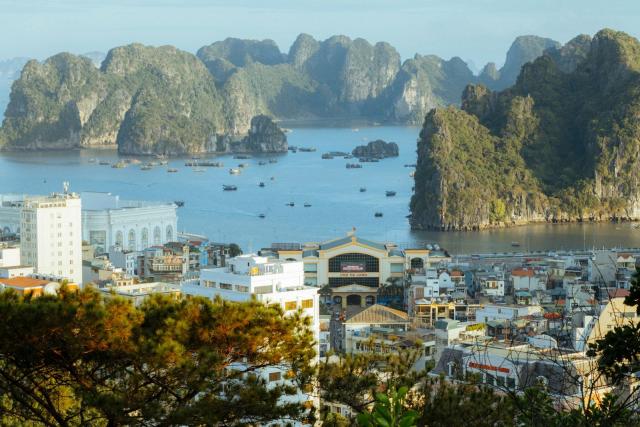
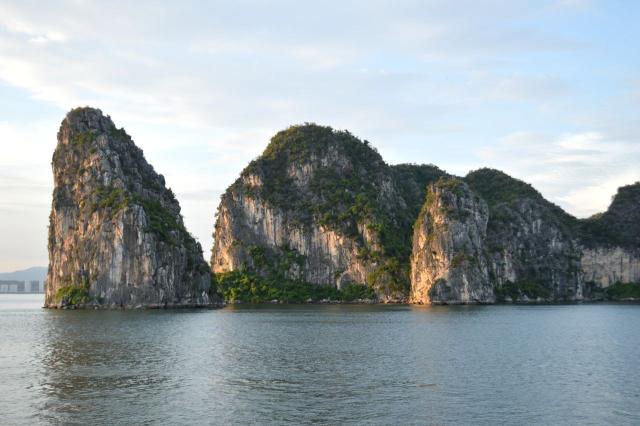
Bai Tu Long Bay has the same limestone karsts and small islands as Ha Long Bay, but fewer boats, wider water and a calmer feel. Typical stops are Thien Canh Son Cave, Vung Vieng floating fishing village (by bamboo rowing boat or kayak), the Cong Do area, Cap La and Cong Dam beach; further towards Van Don are Quan Lan and Minh Chau islands and Bai Tu Long National Park. From Bai Chay you can go on a day cruise, an overnight cruise or take a speedboat to the islands.
If you are new to the bay routes, read Ha Long Bay route 1 or route 2 first for a reference point, then come back to see whether Bai Tu Long suits you better.
Where is Bai Tu Long? Two meanings of the name
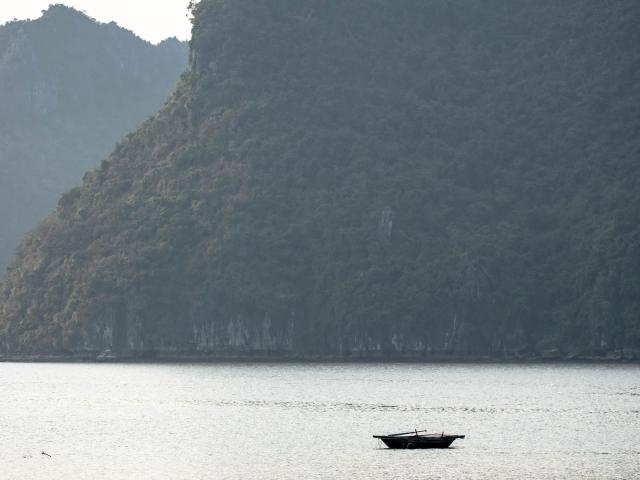
The name “Bai Tu Long” is used for two different areas; understanding this from the start helps you avoid booking the wrong tour.
1. The north-eastern part of Ha Long Bay (route 4)
This is where most cruises marketed as “Bai Tu Long” actually go. Administratively it is still part of Ha Long Bay and sold as sightseeing route 4 (VHL4): Co Cave (Thien Canh Son), Thay Cave, Cap La, the Tung Ang – Cong Do eco-area, Xep islet and Vung Vieng fishing village. The scenery is classic limestone karst, but it lies away from the busy zone around Sung Sot Cave and Ti Top, so it is noticeably quieter.
2. Bai Tu Long Bay around Van Don
In the narrow geographic sense, Bai Tu Long Bay is the sea of Van Don special zone, with large inhabited islands such as Quan Lan, Minh Chau, Ngoc Vung and Thang Loi, plus Bai Tu Long National Park. There are fewer sheer limestone towers and more forested islands, long sandy beaches and fishing villages. This area is not yet inside the Ha Long Bay World Heritage zone, but the province has approved a plan linking the Ha Long Bay and Yen Tu heritage with Bai Tu Long Bay.
Quick check: if the itinerary lists Sung Sot Cave, Ti Top or Luon Cave, it is the classic Ha Long route; if it lists Thien Canh Son, Vung Vieng, Cong Do or Cap La, it is “Bai Tu Long” in meaning 1; if you have to go to Cai Rong port in Van Don, you are visiting Bai Tu Long Bay in meaning 2.
Which places in Bai Tu Long are worth visiting?
Thien Canh Son Cave
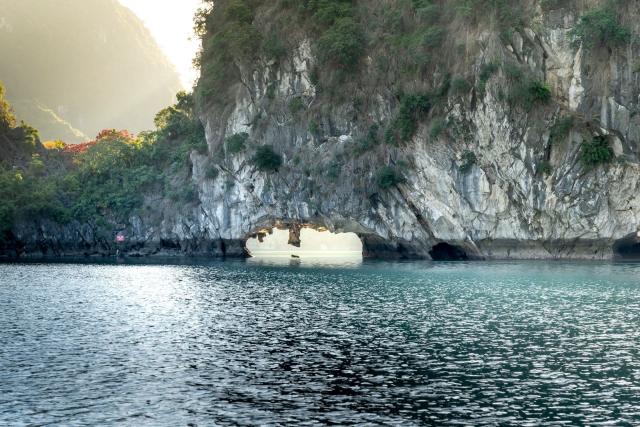
The cave sits on the side of a limestone island; you climb about 200 fairly steep stone steps to reach the entrance. Inside are stalactites and stalagmites in a fairly natural state, with far smaller crowds than the caves on routes 1–2. A visit usually takes 30–45 minutes. Travellers with weak knees or older companions may prefer to stay on board; see Ha Long with older travellers for tips.
Vung Vieng fishing village
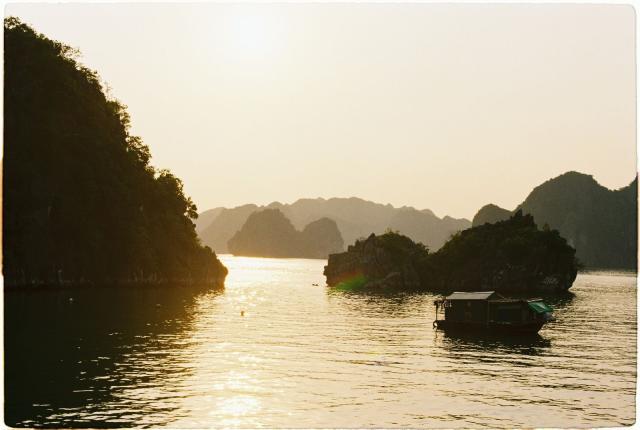
Vung Vieng is a floating fishing village in the middle of the bay, about 20–25 km from the mainland, known for its raft houses, fish farms and slow pace of life. Visitors usually ride a bamboo boat rowed by a local (around 50,000 VND per person if not already included) or paddle a kayak around the village. It is the most photogenic stop on the route, best in the early morning when the water is still.
Cong Do, Cap La and Cong Dam beach
Cong Do is a protected area with lagoons and pools enclosed by karsts, ideal for kayaking. Cap La and Cong Dam beach usually appear only on 3-day/2-night itineraries, reached by small tender or kayak, with quiet sandy beaches for swimming in summer. According to many operators, in winter (roughly November to March) stops may change to avoid wind, so ask for the exact itinerary for your date.
Quan Lan, Minh Chau and Bai Tu Long National Park
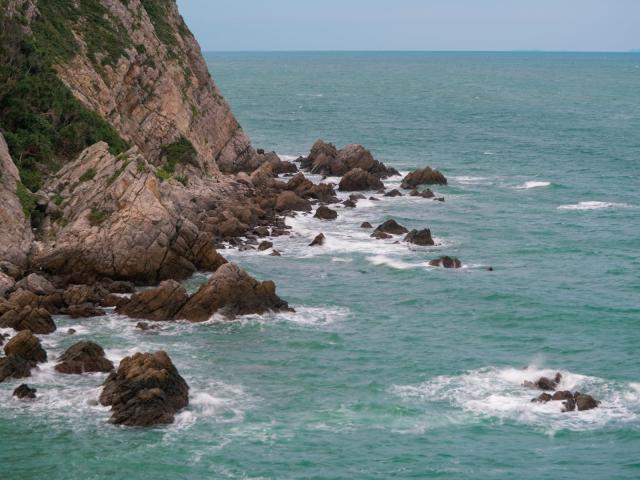
If you want “Bai Tu Long” in the island-and-beach sense, head to Van Don. Quan Lan has Son Hao and Quan Lan beaches, the old Quan Lan communal house and dune roads; Minh Chau has clear water and a tram forest. Bai Tu Long National Park was established in 2001, covers about 15,783 ha (mostly sea), has Ba Mun island as its core zone and is recognised as an ASEAN Heritage Park. For forest walks on Ba Mun, join a programme guided by the park management.
Bai Tu Long Bay vs Ha Long Bay
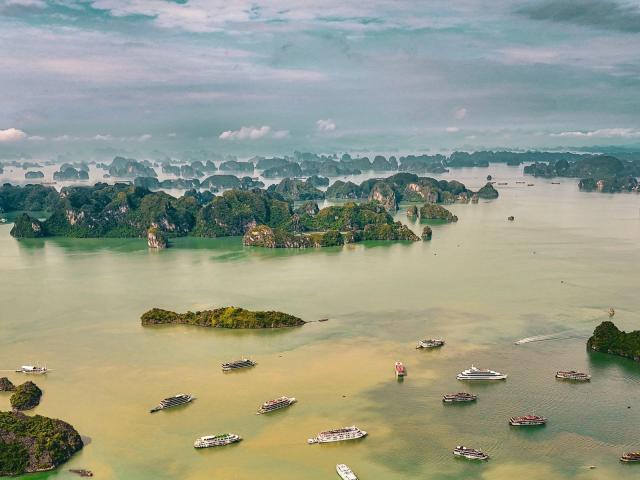
| Criteria | Ha Long Bay (routes 1–2) | Bai Tu Long (route 4) | Bai Tu Long Bay (Van Don) |
|---|---|---|---|
| Scenery | Dense karsts, iconic caves and islets | Karsts, more open water, fishing village | Forested islands, long beaches, island villages |
| Crowds | Busiest, many boats at main stops | Clearly quieter | Quiet on weekdays, busy in summer and at weekends |
| Highlights | Sung Sot, Ti Top, Luon Cave, Thien Cung | Thien Canh Son, Vung Vieng, Cong Do, Cap La | Quan Lan, Minh Chau, Ba Mun |
| Departure from Bai Chay | Tuan Chau port, about 15–20 min by car | Ha Long International Cruise Port, Hon Gai pier or Tuan Chau, depending on company | Cai Rong port (about 1 hour by car) or Hon Gai pier |
| Reference ticket | About 250,000 VND/person + port fee | About 200,000 VND/person + port fee | Speedboat about 140,000–180,000 VND one way |
| Sensible duration | Day boat 4–6 hours or 2D1N | Day boat 6–8 hours, ideally 2D1N or 3D2N | At least 2D1N, staying on the island |
| Best for | First-timers, short trips, families with small children | Repeat visitors, couples, quiet-seekers | Wild beaches, camping, cycling |
In short, Ha Long wins on iconic sights and convenience; Bai Tu Long wins on calm and a sense of discovery. If you are also weighing Lan Ha Bay near Cat Ba, see Ha Long Bay or Lan Ha Bay.
How to get to Bai Tu Long from Bai Chay
Overnight cruise on the Bai Tu Long route
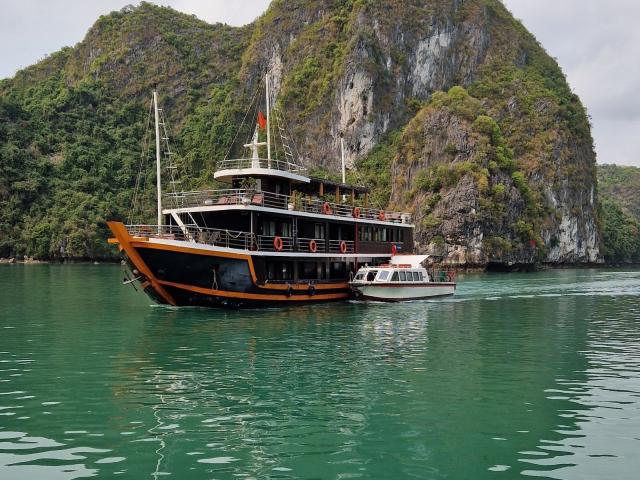
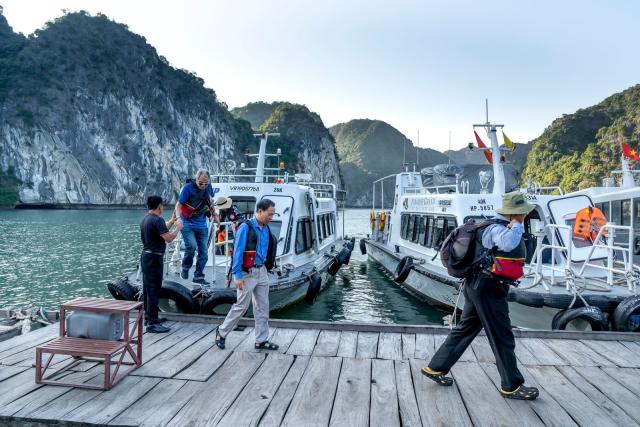
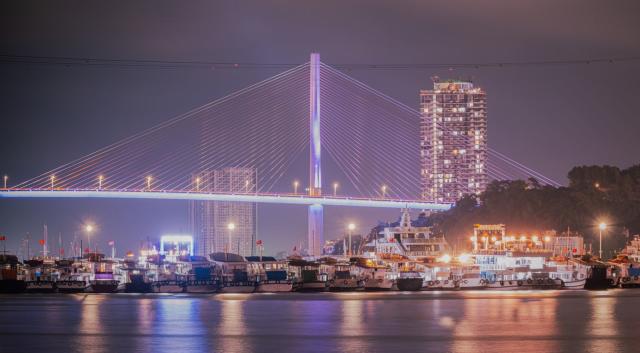
This is the most common and easiest option. Boats leave from Ha Long city itself: depending on the company, from Ha Long International Cruise Port in Bai Chay, Hon Gai pier across Bai Chay Bridge, or Tuan Chau port. Staying in Bai Chay, you need only about 5–20 minutes by car to the meeting point. A 2-day/1-night package on this route typically costs about 2.5–6 million VND per guest depending on the boat, usually including sightseeing tickets, kayaks and bamboo boats.
Important: some boats say “Bai Tu Long” but only skirt the edge of Ha Long Bay. Before booking, ask for the route name (VHL4 or other), the exact stops and the pick-up point. If you are torn between sleeping on a boat or on land, read overnight cruise or hotel in Ha Long.
Day sightseeing boat (route 4)
Some day boats run route 4 in about 6–8 hours, stopping at Thien Canh Son Cave, Cong Do and sometimes Vung Vieng. The route 4 scenic ticket is about 200,000 VND per person, plus a return port fee of about 80,000 VND if not included. General boarding tips are in Ha Long Bay visiting tips.
Speedboat to the Van Don islands
From Bai Chay, the drive along the Ha Long – Van Don expressway to Cai Rong port takes about 1 hour (around 50–60 km). From Cai Rong, speedboats reach Minh Chau in about 45–60 minutes and Quan Lan in about 50–90 minutes depending on the boat; fares are roughly 140,000–180,000 VND one way. There are also some departures from Hon Gai pier to Quan Lan, taking about 60–90 minutes. Schedules are busier at weekends and in summer; book return tickets and arrive 20–30 minutes early.
If you fly into Van Don Airport, you can fit Bai Tu Long in at the start or end of your trip; see Van Don Airport to Ha Long and Bai Chay. Getting between Bai Chay, Hon Gai and the ports is covered in getting around Ha Long.
Bai Tu Long or Ha Long: which should you choose?
- First visit, only one day: choose Ha Long Bay route 1 or 2 to see famous sights such as Sung Sot Cave and Ti Top.
- Been to Ha Long and want something different: a 2D1N cruise on the Bai Tu Long route.
- Couples, quiet-seekers, photographers: Bai Tu Long, ideally with Vung Vieng in the morning.
- Families with small children or older relatives: think carefully, as the route is long and Thien Canh Son has many steps; shorter Ha Long routes are usually gentler.
- Beaches, cycling, staying on an island: go to Quan Lan or Minh Chau in Van Don for at least 2 days and 1 night.
Suggested itineraries from Bai Chay
Option 1: 2-day/1-night Bai Tu Long cruise
- Day 1, around 11:30–12:30: board, lunch while sailing into the bay.
- Afternoon: Thien Canh Son Cave or kayaking at Cong Do; sunset on the sundeck.
- Day 2, early morning: bamboo boat into Vung Vieng; check out, early lunch and back at the pier around 11:30–12:00.
Option 2: 2 days/1 night on Quan Lan island
- Morning of day 1: drive from Bai Chay to Cai Rong port, speedboat to Quan Lan.
- Afternoon: rent a bicycle or electric buggy on the island, visit Quan Lan communal house and Son Hao beach; seafood dinner in the village.
- Day 2: morning swim (in summer), midday or afternoon boat back to Cai Rong, then return to Bai Chay.
You can fit option 1 into a 3-day/2-night Ha Long itinerary by spending one day in Bai Chay and one night on board. If you want to go even further to Co To, read about Co To island tourism.
When to go and practical notes
- Best season: roughly April–June and September–November for clear skies and calm seas; summer is good for swimming at Cong Dam and Quan Lan. Month-by-month details in best time to visit Ha Long.
- Storm season (about June–October): boats may be suspended by port authority notice; choose packages that allow date changes.
- Winter: fog can reduce visibility and kayaking may be cancelled; bring a windbreaker.
- Documents: bring your original passport or ID card for boarding, especially on overnight cruises.
- 2026 change: seaplane sightseeing flights stopped on 1 April 2026, so there is no seaplane option to see Bai Tu Long from above.
Bai Tu Long has plenty of moments worth capturing, from Vung Vieng at sunrise to kayaking inside a lagoon. If you prefer not to bring your own gear, you can rent a compact camera from KUKU Cho Thuê Máy Ảnh Hạ Long, from about 180,000 VND per day, with a bag and free delivery within 2 km.
For an overview of other sights around the city before you finalise your plan, see Ha Long attractions and the Ha Long travel guide from A to Z.
Frequently asked questions
Is Bai Tu Long Bay part of Ha Long Bay?
It depends on the meaning. The popular “Bai Tu Long” cruise route (Thien Canh Son, Vung Vieng, Cong Do) is still inside Ha Long Bay and sold as route 4. Bai Tu Long Bay in the narrow sense lies in Van Don special zone, adjoining the north-east of Ha Long Bay, and is not yet part of the World Heritage zone.
Is Bai Tu Long more beautiful than Ha Long Bay?
Not necessarily more beautiful, but different: similar scenery with fewer boats and more calm. Ha Long has more famous sights; Bai Tu Long suits repeat visitors and people who prefer quiet.
Can I visit Bai Tu Long as a day trip from Bai Chay?
Yes. Some day boats run route 4 in about 6–8 hours. Because the distance is long, a 2-day/1-night cruise is more relaxed and leaves time for Vung Vieng in the morning.
How much is the Bai Tu Long sightseeing ticket?
The Ha Long Bay route 4 scenic ticket is about 200,000 VND per person, plus a return port fee of about 80,000 VND. Most cruises include tickets in the price; the bamboo boat into Vung Vieng is sometimes extra, around 50,000 VND per person.
Inspiration from every journey is where every trip beginsAnstay is ready to accompany you with a 5% discount for members.