Hang Luon Cave: kayaking, what to expect and practical tips
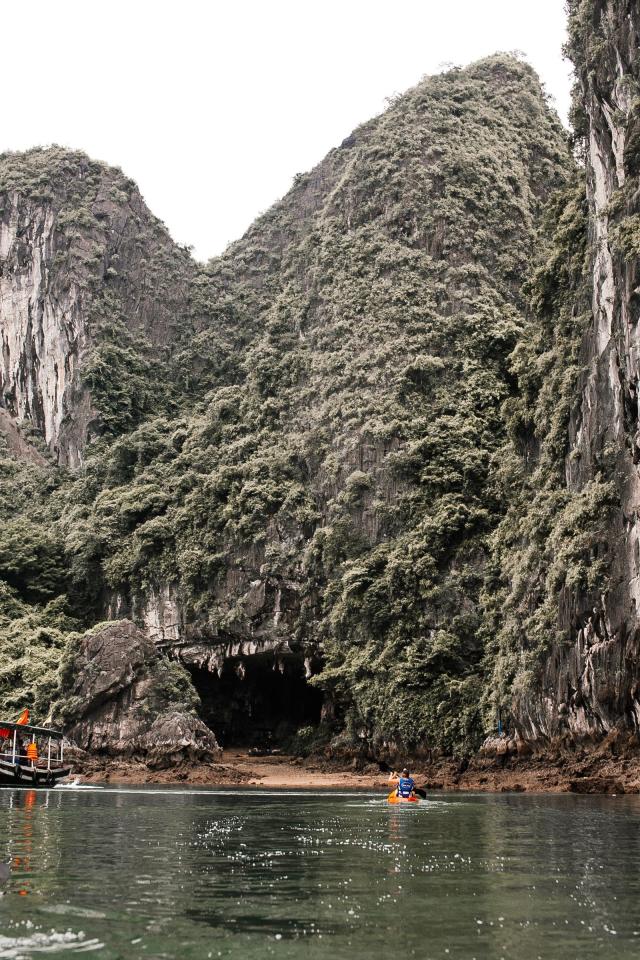
- Hang Luon is a water cave (a tunnel through limestone) on Ha Long Bay, usually on sightseeing Route 2 near Bo Hon Island.
- The usual way in is by kayak or bamboo boat (do nan); large cruise boats cannot pass through the cave.
- You do not have to paddle yourself: many tours offer double kayaks or a boat with a rower — ask when booking.
- Low tide can make the passage shallow or temporarily closed — the real schedule depends on conditions that day.
- Unlike Sung Sot (a dry walk-in cave) or Titop (stairs and a beach), Hang Luon is a calm on-water experience close to the rock walls.
What is Hang Luon and where is it?
Hang Luon (Luon Cave) is a water-tunnel cave cut through a limestone massif on Ha Long Bay, Quang Ninh. Unlike dry walk-in caves such as Sung Sot, seawater runs through Hang Luon; visitors usually sit in a kayak or bamboo boat to pass through to the quiet lagoon beyond.
The cave sits in the central heritage zone and is typically linked to sightseeing Route 2 with Sung Sot Cave and Titop Island. From the passenger pier (often Tuan Chau or Bai Chay), cruise boats take about 1–1.5 hours to reach this area, depending on the vessel and stop order. An overview of bay stops is in Ha Long attractions.
The Vietnamese name “Luồn” matches the feeling: you slip through a narrow passage under a rock arch, light shifts from bright bay to darker cave then opens onto green water ringed by cliffs. The stop is short, yet many first-time visitors remember it because they feel “inside” the bay rather than only watching from the deck.
What can you do at Hang Luon?
The main activity is passing through the cave on a small craft. Most boats stop about 30–60 minutes for this segment (depending on the tour and tide). In that window you can:
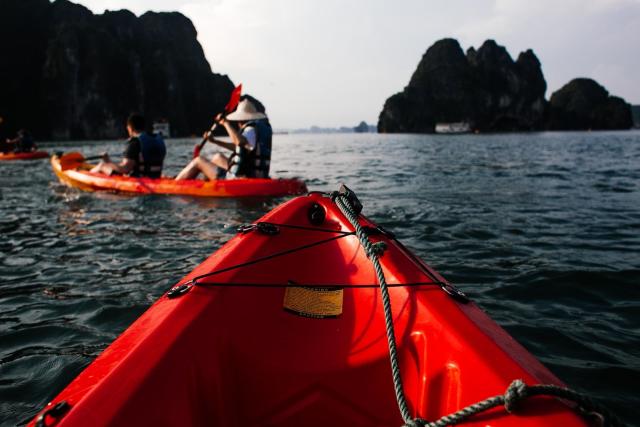
- Paddle a double or single kayak through the cave (life jackets; guides or crew nearby at the transfer point).
- Sit in a bamboo boat with a rower — better for young children, older travellers or anyone who prefers not to paddle.
- Take photos at the cave mouth and the inner lagoon when light allows.
- Watch rock walls, roots and clear water; some trips spot birds or small fish near the surface.
Hang Luon is not a hiking or swimming stop. If you want exercise plus a panoramic photo, Titop fits better; for wide dry cave geology, Sung Sot is the main choice. Hang Luon adds a gentle on-water segment after cave walking or stair climbing.
Kayaking Hang Luon: is it mandatory?

You are not required to paddle a kayak yourself. Many Route 2 tours list “Hang Luon / kayak” but in practice offer two common options: a self-paddle kayak (often a double) or a bamboo boat with a rower. Some guests stay on deck and only view the cave mouth if they do not want to transfer — confirm tour rules, because some schedules expect everyone to board a small craft.
Self-paddling suits people with basic balance who want to control speed. A double kayak shares the effort; the rear seat usually steers. Bamboo boats are slower and more stable, good for families with children or first-time bay visitors. Whatever you choose, wear a life jacket and follow instructions on direction, meeting point and return time to the main boat.
- Wear trainers or strapped sandals; avoid flip-flops that slip when boarding.
- Keep phones and cameras in a waterproof pouch if you bring them.
- Do not stand up in a kayak inside the narrow cave.
- Young children should share a boat or double kayak with an adult; follow the organiser’s age rules.
How does Hang Luon differ from Sung Sot and Titop?
The three stops often share Route 2 but feel very different. Use the table if energy or time is limited:
| Stop | Experience type | Effort | Best for |
|---|---|---|---|
| Sung Sot Cave | Dry cave, walking indoors | Moderate stairs | Families, geology photos |
| Titop Island | Summit climb + beach | About 400 steps or a swim | Panorama views / swimming |
| Hang Luon | Water cave, kayak or boat | Light paddling or sitting | Calm on-water time |
If you want one “lighter” stop after climbing at Sung Sot or Titop, Hang Luon is often the relaxed segment. If you fear water or get seasick easily, you can skip kayaking and stay on the main boat. Route 1 versus Route 2 (which includes Luon) is compared in Ha Long Bay Route 1 or Route 2.
How to get to Hang Luon
The usual way is a day Route 2 bay tour or an overnight cruise that includes the Hang Luon / kayak area. Day tours often leave in the morning from Tuan Chau or Bai Chay piers and last about 5.5–6 hours door to door. Overnight cruises may schedule kayaking early morning or afternoon depending on the ship.

You can also charter a private boat for a group and request a Hang Luon stop, but confirm the stop is on a permitted route and whether the price already includes entrance tickets. Do not try to kayak from the mainland to the cave on your own — the distance is long and bay rules require proper permits and safety conditions.
| Option | Whole trip time | Pros | Notes |
|---|---|---|---|
| Shared Route 2 day tour | about 5.5–6 hours | Simple, guided, kayak/boat ready | Fixed times, busy in peak season |
| Private boat for a group | Flexible | You choose stop timing | Compare prices, check licences |
| Overnight cruise | 2 days 1 night | Kayak when fewer day boats | Higher cost, book ahead |
| Hang Luon only, skip other stops | Uncommon | — | Most boats sell the full Route 2 set |
On a multi-day trip, you can keep one half-day for Route 2 with Hang Luon and another for shore plans as in a 3-day 2-night Ha Long itinerary or a 2-day 1-night itinerary from Hanoi.
Time and estimated costs
Time at the Hang Luon / kayak area itself is often about 30–60 minutes. Adding boat travel and other Route 2 stops, the bay half-day usually runs to nearly a full day. The cave passage by kayak or bamboo boat is often only a few minutes to about 15–20 minutes round trip, depending on queues and tide.
Hang Luon costs are usually bundled into the Route 2 entrance ticket and boat fee; kayak or bamboo boat may be included or charged as a surcharge depending on the operator. Many sources quote adult Route 2 tickets around 290,000 VND; children under a stated height are often free or discounted. Figures below are indicative only — confirm when booking:
| Item | Estimate | Notes |
|---|---|---|
| Route 2 entrance (adult) | about 290,000 VND | Set by bay management; can change by year |
| Shared day tour package | about 600,000–1,000,000 VND/person | Often boat, ticket, guide; kayak/boat vary by package |
| Kayak / boat surcharge (if separate) | about 50,000–150,000 VND/person | Depends on operator; many tours include it |
| Private boat (split by group) | about 300,000–600,000 VND/person | Depends on boat size and headcount |
Tides and when to go
Hang Luon depends on tide more than dry caves. When water is very low, the inner passage can be shallow, rocks may show, or crew may skip kayaking for safety. With a moderate high tide, the tunnel is clearer. Guides or captains usually decide on the day — printed schedules can change.
You can visit whenever bay boats operate. Summer (about May–September) is warmer for kayaking but busier, with storm delays possible. October–November and March–April are often comfortable; winter water is colder, so bring a light layer after paddling. Month-by-month weather notes are in the best time to visit Ha Long.
Practical tips for Hang Luon and kayaking
- Check weather and harbour notices a day ahead, especially in storm season.
- Bring ID for boarding formalities.
- Always wear a life jacket on kayak or bamboo boat; keep it on inside the cave.
- Do not swim freely outside permitted zones; Hang Luon is not a swim stop.
- Keep clear of rock walls; do not brace hard or bang paddles against the cave.
- Watch the return time announced by your guide.
- Do not litter in the water; carry a small bag for personal rubbish.
- If you cannot swim, fear water or have back pain, choose a bamboo boat with a rower instead of self-kayaking.
Overall, Hang Luon suits most first-time Ha Long visitors who want a close-up on-water moment. The key is accepting tide-driven schedule changes, picking kayak or boat to match your energy, and following safety briefings.
Hang Luon FAQ
What is Hang Luon Cave?
Hang Luon is a water tunnel through limestone on Ha Long Bay. Visitors usually pass through by kayak or bamboo boat because large ships cannot enter. It is typically part of sightseeing Route 2.
Do I have to kayak at Hang Luon?
No. Many tours offer double kayaks or a bamboo boat with a rower. Some guests may stay on the main boat if they prefer — confirm tour rules when booking.
How is Hang Luon different from Sung Sot and Titop?
Sung Sot is a dry walk-in cave; Titop is stairs and a beach; Hang Luon is an on-water passage through a cave. All three often share Route 2 but demand different effort and feel.
How long does Hang Luon take?
The kayak/boat stop is often about 30–60 minutes. The cave passage itself is shorter; a full Route 2 day with boat travel is usually about 5.5–6 hours from leaving the pier.
How do tides affect the visit?
Very low water can make the cave shallow or temporarily unavailable. Captains and guides decide on the day; keep plans flexible.
More general trip questions are covered in Ha Long FAQs and the Ha Long travel guide A–Z.
Inspiration from every journey is where every trip beginsAnstay is ready to accompany you with a 5% discount for members.